
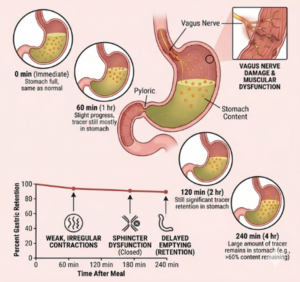
Gastroparesis is delayed gastric emptying in the absence of mechanical obstruction, producing chronic nausea, vomiting, early satiety, bloating and poor oral intake. The disorder slows or stops the digestive process and disrupts normal bowel movement activity. Symptoms are often chronic and reduce the patient’s health-related quality of life. Causes include diabetic autonomic neuropathy, postsurgical vagal injury, idiopathic disease, and connective-tissue disorders. There are several etiologies of gastroparesis, including diabetic gastroparesis, postsurgical gastroparesis, and idiopathic gastroparesis. There is growing awareness of gastroparesis, and it has been identified as a side effect of GLP-1 agonists administered as treatments for diabetes and obesity. We estimate there may be over 5 million individuals with gastroparesis in the United States as of 2024. There is currently one FDA approved pharmacologic therapy for gastroparesis.
Gastroparesis is associated with elevated fasting and postprandial GIP, acute postprandial hyperglycemia and reduced gastrointestinal transit times and higher rates of slow transit constipation. In clinical trials, mizagliflozin has been shown in healthy volunteers, type 2 diabetics, and patients diagnosed with PBH to reduce postprandial GIP and acute postprandial hyperglycemia. Mizagliflozin has also been shown in clinical trials to relieve symptoms associated with chronic idiopathic constipation.
Vogenx is planning to submit an IND to the FDA for gastroparesis in 2026, followed by a phase 2 proof of concept clinical trial of mizagliflozin in patients diagnosed with idiopathic gastroparesis. This study is expected to be a US-based, multicenter, randomized, double-blind, placebo-controlled, repeat dose parallel group study with a 28-day run-in plus a 28-day treatment period. The primary endpoint is expected to be the change in gastric emptying as assessed by the gastric emptying breath test.